
Integrating microbiome science
with cosmetic product development
Beyond clean claims, the emergence of skin microbiome in skin care
Skin care is entering a new era, one where skin biology, consumer insight, and smart formulation converge to shape innovation. At the center of this shift, the skin microbiome has emerged as a key focus, opening new pathways for cosmetic testing and research, driving the next generation of cosmetic innovation.
Why the microbiome-epidermis partnership is reshaping skin care
Microbiome science began as a conversation about “gentle” products and has quickly evolved into a deeper understanding of how the epidermis and its microbial ecosystem work together to maintain healthy skin.
A simple but robust insight is at the origin of the current interest in skin microbiome: the skin is not just a surface. The skin acts as a biological interface where the epidermis and its microbial communities work together to maintain balance.
The epidermis provides structure, lipids, moisture, and antimicrobial peptides, while the skin microbiome, a diverse ecosystem of bacteria, fungi, viruses, and microscopic mites, helps regulate pH, limit pathogen growth, and support immune readiness.
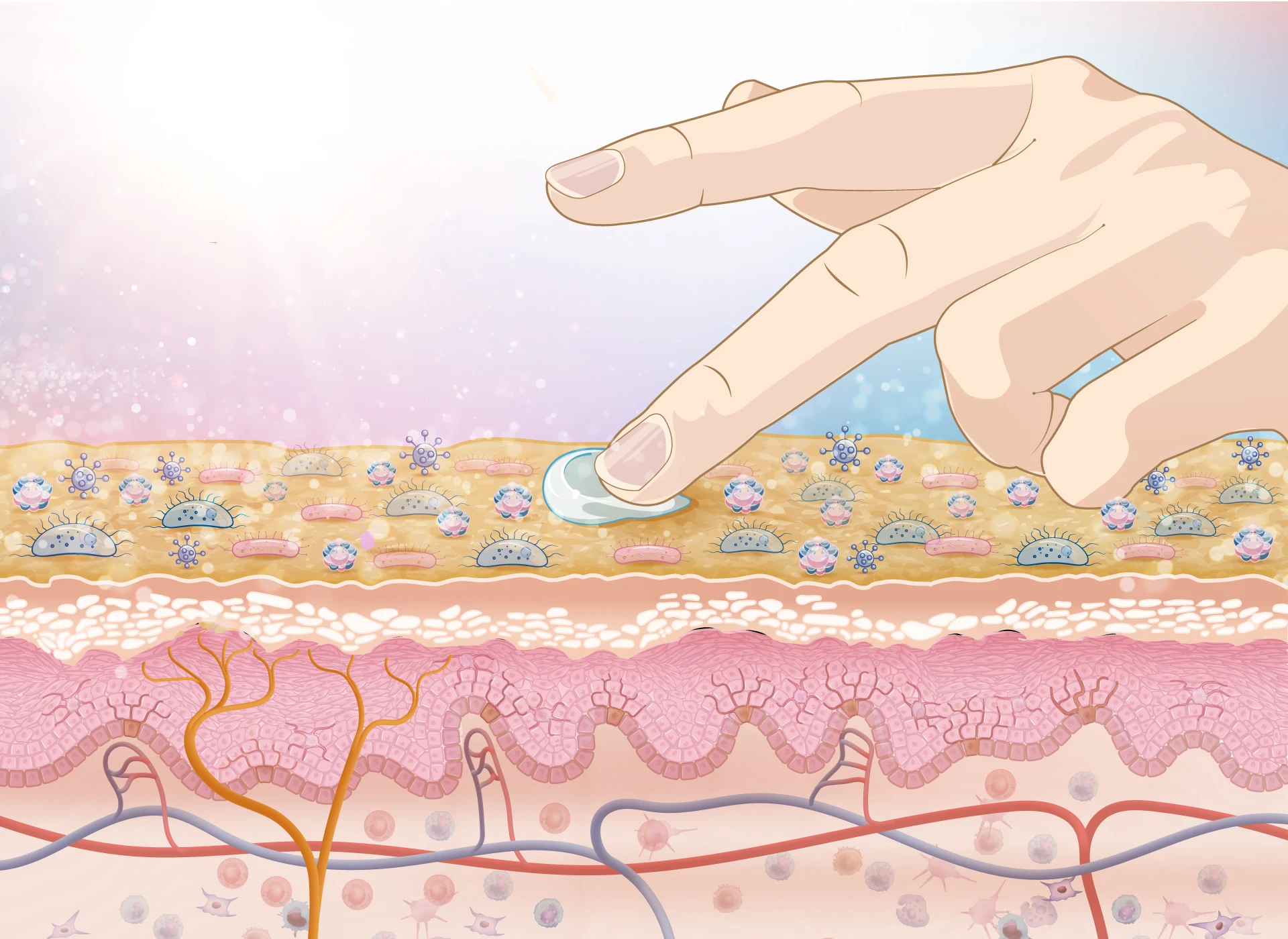
This interaction is highly dynamic:
- the epidermis shapes microbial growth
- the microbiome helps reinforce barrier function and supports epidermal homeostasis.
When this balance is disrupted, signs such as dryness, redness, sensitivity, or breakouts can appear. Understanding and preserving this interconnected ecosystem is becoming a cornerstone of next-generation skincare formulations.
Consumer expectations for skin microbiome supporting formulations
Today’s consumers are highly informed and increasingly cautious. They expect products that are:
- Gentle and non-disruptive
- Supportive of the skin barrier and microbiome
- Minimalist and biologically respectful
- Effective without harsh surfactants or aggressive active ingredients
In response, formulators are embracing microbiome-conscious design principles, which go beyond avoiding controversial ingredients. This new approach focuses on preserving the skin ecosystem:
- Mild, non-stripping surfactants that respect the lipid barrier
- Balanced pH to maintain microbial stability
- Thoughtful ingredient combinations that avoid unnecessary antimicrobial stress
- Prebiotics, postbiotics, and barrier-supporting lipids to reinforce natural defenses
- Simplified routines with synergistic formulas: Products designed to coexist harmoniously within a routine and support consumers’ demand for fewer but smarter steps.
Together, these shifts show how consumer behavior and formulation science have become inseparable, both pushing the industry toward gentler, biologically informed solutions.
However, translating these formulation principles into real-world performance requires more than selecting the right ingredients. Because barrier function, immune signaling, and microbial balance are tightly interconnected, even subtle changes in formulation can lead to meaningful biological effects. This has accelerated the move toward human-relevant testing approaches that better capture skin complexity and support credible, evidence-based claims.
Research practices and challenges in studying the skin microbiome
Today, skin microbiome research goes beyond simply identifying microbial species, aiming to understand how these communities function and interact with their environment. Studies typically begin with advanced metagenomic approaches, increasingly supported by long-read sequencing technologies, to resolve strain-level diversity and metabolic potential. These datasets are complemented by multi-omics tools (metatranscriptomics, proteomics, and metabolomics) which help clarify microbial activity and host–microbe interactions under dynamic conditions.
To translate these insights into biological function, researchers rely on culturomics, CRISPR-enabled functional assays, and progressively sophisticated host models, including organoids and skin-on-chip platforms. AI-driven analytics are now widely used to integrate these complex datasets and to predict how microbial communities respond to environmental stressors or formulation exposure.
Despite these advances, studying the skin microbiome remains challenging. Research is complicated by high inter-individual variability, strong sensitivity to external factors (such as environment, lifestyle, and topical products), and the difficulty of distinguishing correlation from causation in complex microbial ecosystems. Moreover, many traditional in vitro or simplified models fail to fully capture the structural, immunological, and microbial complexity of human skin.
As research pipelines move closer to real-world application, ex vivo human skin models emerge as a critical testing tool. Skin models, such as NativeSkin®, preserve natural skin architecture, barrier function, immune components, and resident microbiota. They provide a uniquely human-relevant environment where ingredient performance, formulation tolerance, and microbiome impact can be evaluated simultaneously. Integrated ex vivo human skin models with advanced analytical assays helps bridge the gap between mechanistic research and product development, ensuring that topical innovations are not only effective, but also truly respectful of the natural skin microbiome ecosystem.
This need for human-relevant, integrated evaluation frameworks is driving the adoption of advanced ex vivo microbiome skin models.
The NativeSkin® model preserves the native human microbiome and allows for epidermis-microbiome interactions under realistic conditions. The presence of a sealed silicone ring on top of the biopsy is ideal for topical applications on a delimited skin surface making this model a gold standard for the testing of microbiome-supporting formulations.

If you wish to learn more about how Genoskin’s ex vivo skin models can support your microbiome studies, don’t hesitate to reach out to our team of skin experts. You can also explore the following relevant resources:
- Poster: An ex vivo human skin model to study skin microbiome
- Application note: NativeSkin and Cosmetics applications
Conclusion: from skin microbiome insight to meaningful innovation
This increasing place of microbiome science in skin care reflects a deeper transformation in the industry, one that recognizes the skin as a living ecosystem where barrier biology and microbial balance are inseparable. As consumer expectations rise, meaningful innovation now depends on the ability to evaluate products in conditions that truly reflect human skin complexity.
By combining advanced microbiome insight with human-relevant testing approaches, brands can move from intention to evidence, and from claims to confidence. Ex vivo skin models such as NativeSkin® help bridge this gap, enabling the integrated assessment of epidermal responses, formulation tolerance, and microbiome compatibility.
Comments are closed.