
Human Primary Mast Cells
Evaluate in vitro mast cell response
Human primary mast cells for research
Reliable human data on drug efficacy & toxicity

Today’s research on new drugs is often complicated by a consistent lack of relevant study tools. This is also the case when it comes to research on mast cells, where rodent and human cell line models are still the standard and human primary mast cells remain notoriously hard to obtain. Genoskin provides a reliable solution to help you study human primary mast cell response to your compound or formula. You’ll find a quick overview of our offer below.
Safety assessment
Monitor mast cell degranulation to evaluate potential drug toxicity and identify adverse effects mediated by mast cells.

Allergic risk reactions
Analyze a drug candidate effects on mast cells degranulation to help assess its potential for inducing allergic responses in patients.

Drug efficacy
Evaluate a drug’s ability to trigger mast cell
degranulation as a marker of immune activation
or inhibit/deplete mast cells.
Bring human-relevant mast cell research into your lab
Research-ready human primary mast cells for advanced in vitro studies
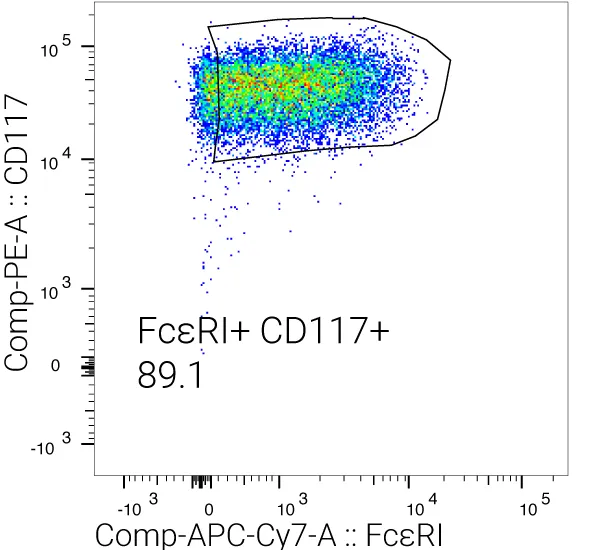
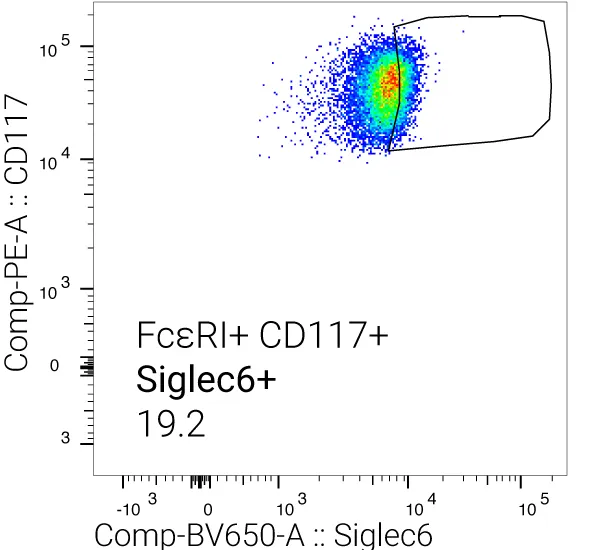
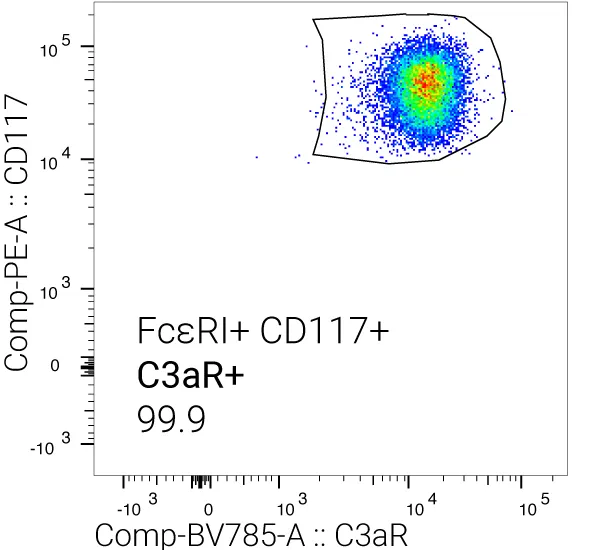
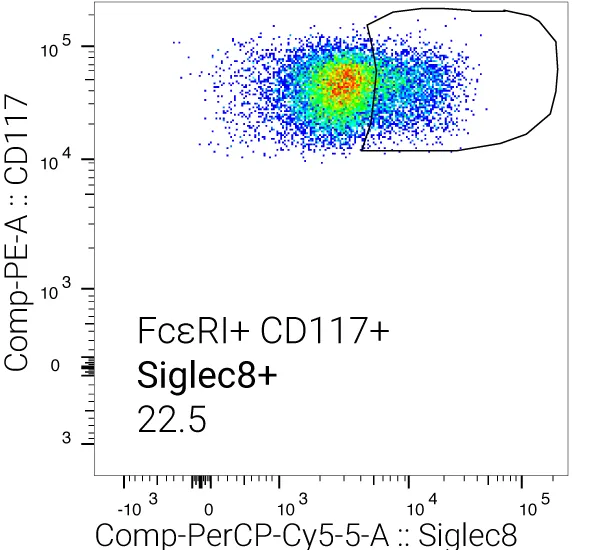
Advance drug efficacy, immunotoxicity, allergy, and immune-response studies with mature, functional human primary mast cells derived from healthy donor CD34+ progenitor cells. Fully characterized for key receptors including CD117, FcεRI, C3aR, and MRGPRX2, these cells enable reliable investigation of mast cell activation, degranulation, cytokine release, inhibition, and depletion directly within your laboratory.
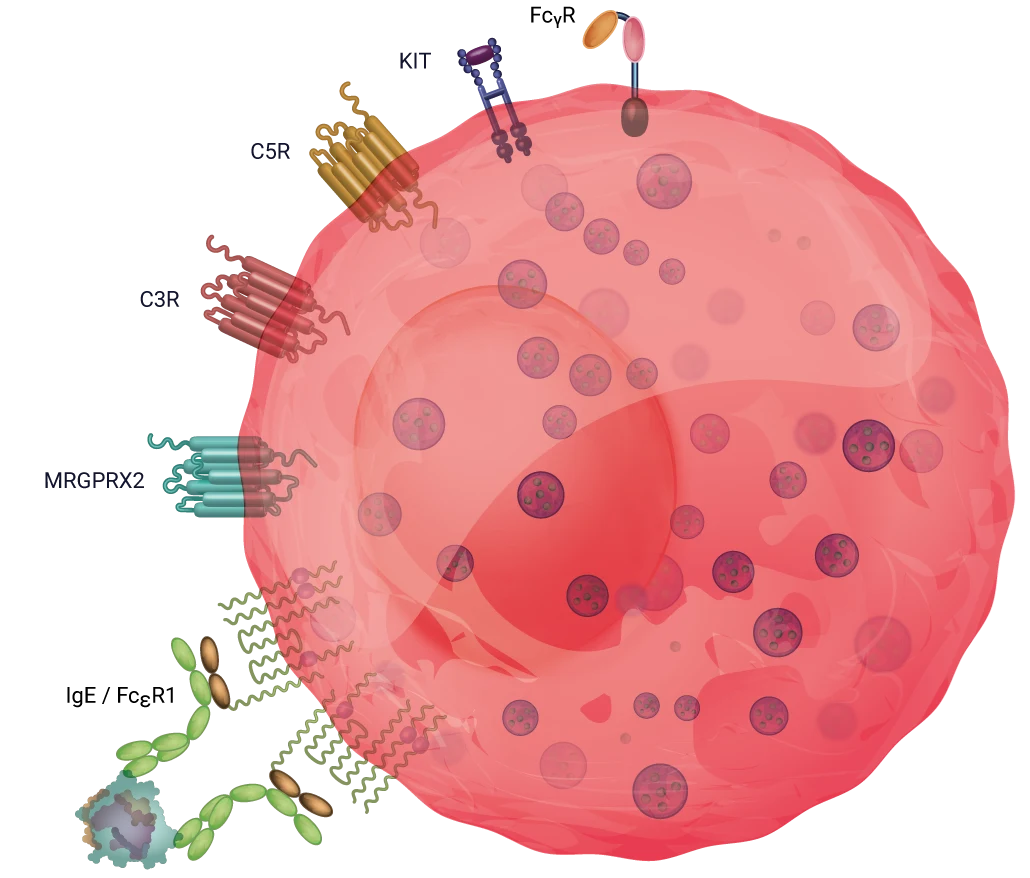
Translational insights into drug efficacy and toxicity
Human-relevant evidence to support confident development decisions
Genoskin has developed a unique process to obtain mast cells using peripheral blood samples from healthy adult donors. This process yields mature mast cells that show the same metabolism and expression as the mast cells in the human body, with the phenotype of connective tissue-type mast cells:
- The granules are filled with heparin, tryptase, and chymase
- They express the high-affinity receptor for IgE (FcεR1α), MRGPRX2 (specifically expressed by skin mast cells), FcgRs, and many G protein-coupled receptors including receptors for complement anaphylatoxins
- They can degranulate and produce cytokines/chemokines in response to many stimuli, including IgE/anti-IgE, cationic molecules that bind to MRGPRX2 (e.g neuropeptide substance P and FDA-approved drugs), C3a and C5a, endothelin-1,…
Each mast cell batch undergoes defined quality control testing before shipment. Mast cell identity and phenotype are confirmed by flow cytometry through the expression of CD117 and FcεRI, while functional activity is verified using a degranulation assay in response to reference compounds, including anti-IgE and Substance P. These controls help ensure that customers receive well-characterized, responsive mast cells ready for use in their in vitro studies.
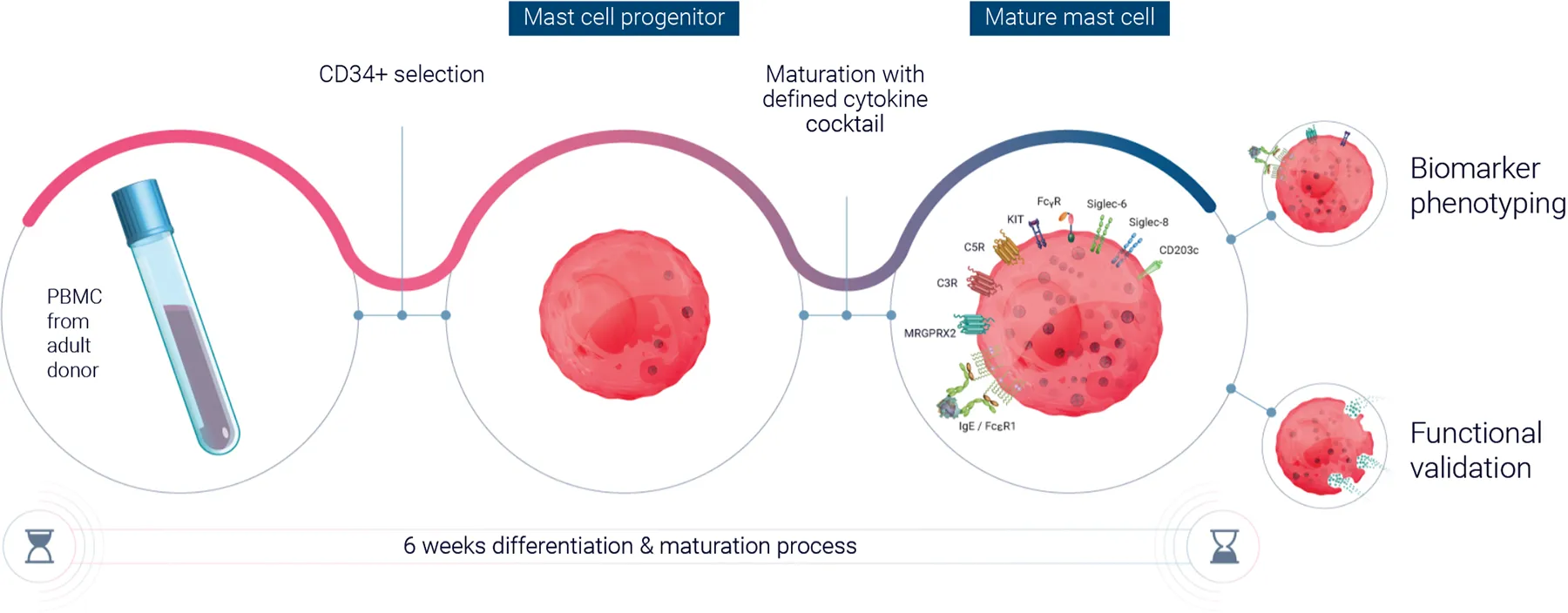
Key receptors are expressed in in vitro cultured human mast cells
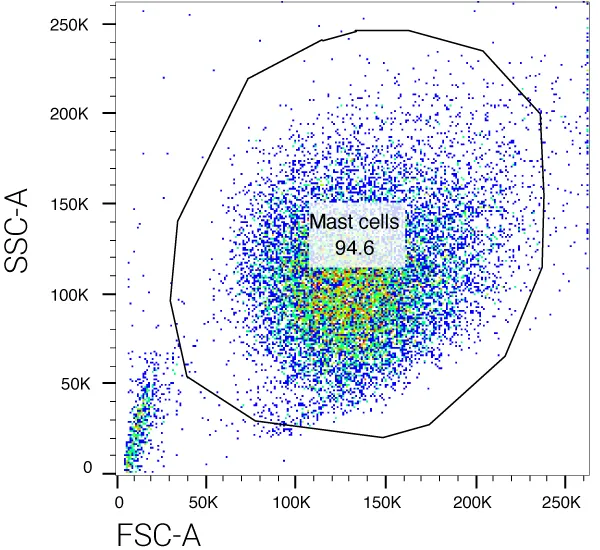
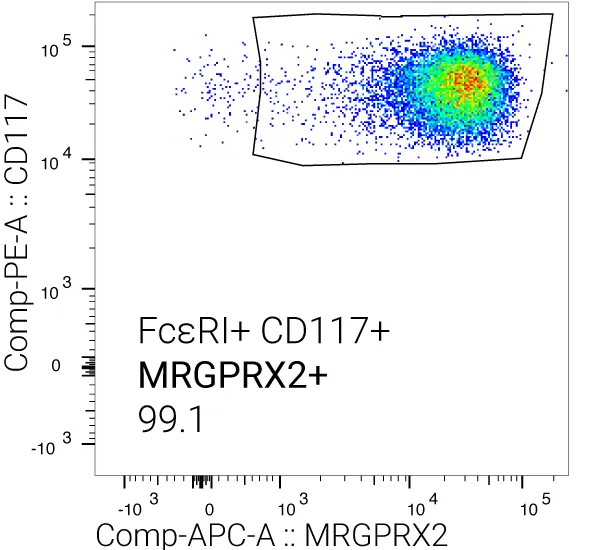
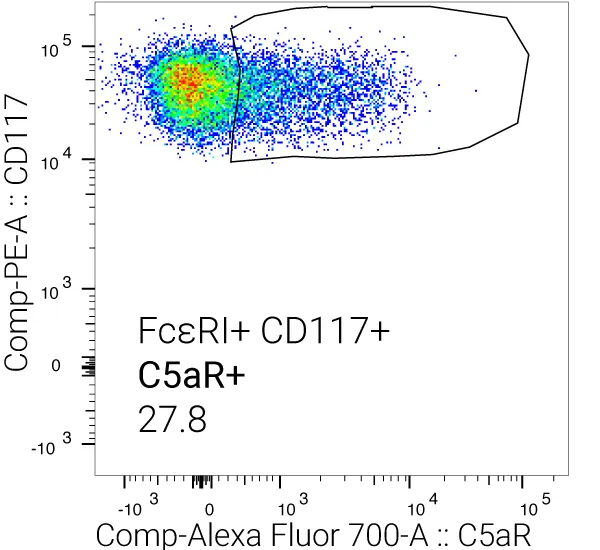
The cells exhibit a mature mast cell profile, with the characteristic size and granularity of fully differentiated mast cells. Expression of the key receptors CD117, FcεRI, C3aR, and MRGPRX2 has also been confirmed, enabling the study of both IgE-dependent and IgE-independent activation pathways.
Induction of degranulation with reference compounds
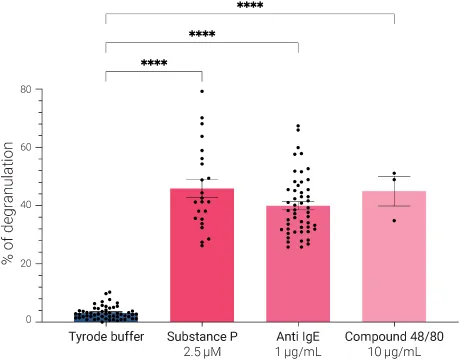
Measure of β-hexosaminidase activity in culture supernatant upon stimulation with reference compounds.
Conditions of experimentation:
- Stimulation at day 1
- 3 replicates for a single donor
**** p-values from T-tests performed between water and indicated compounds (<0.0001= extremely significant)
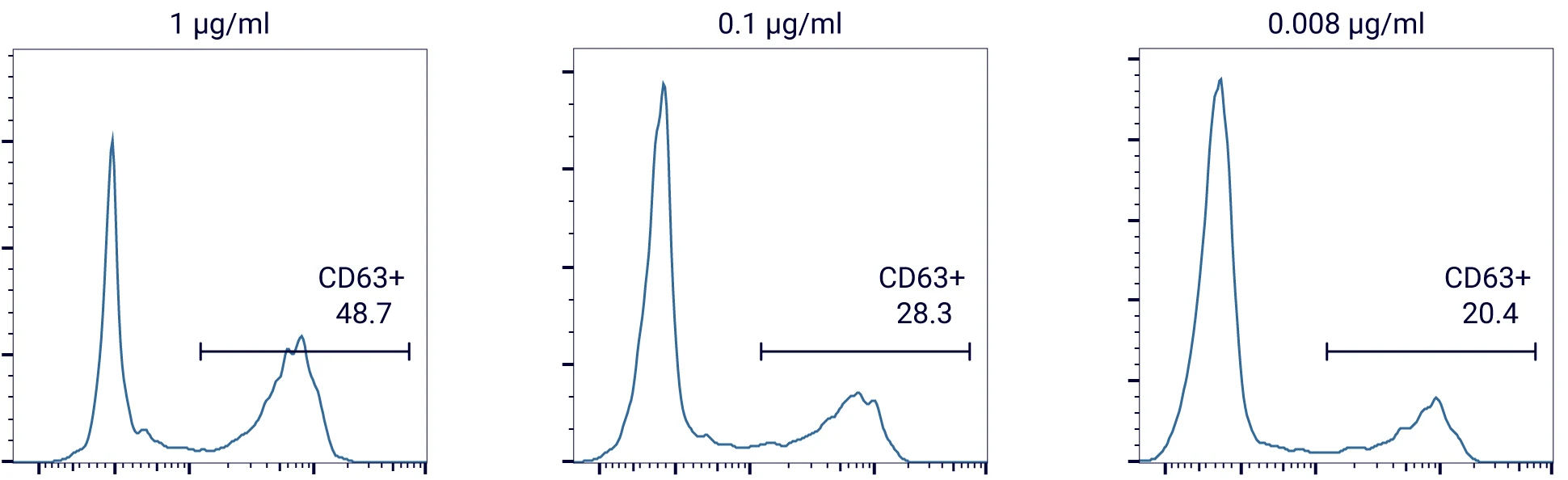
CD63 Staining via Flow Cytometry: A Powerful Tool for Mast Cell Degranulation Studies
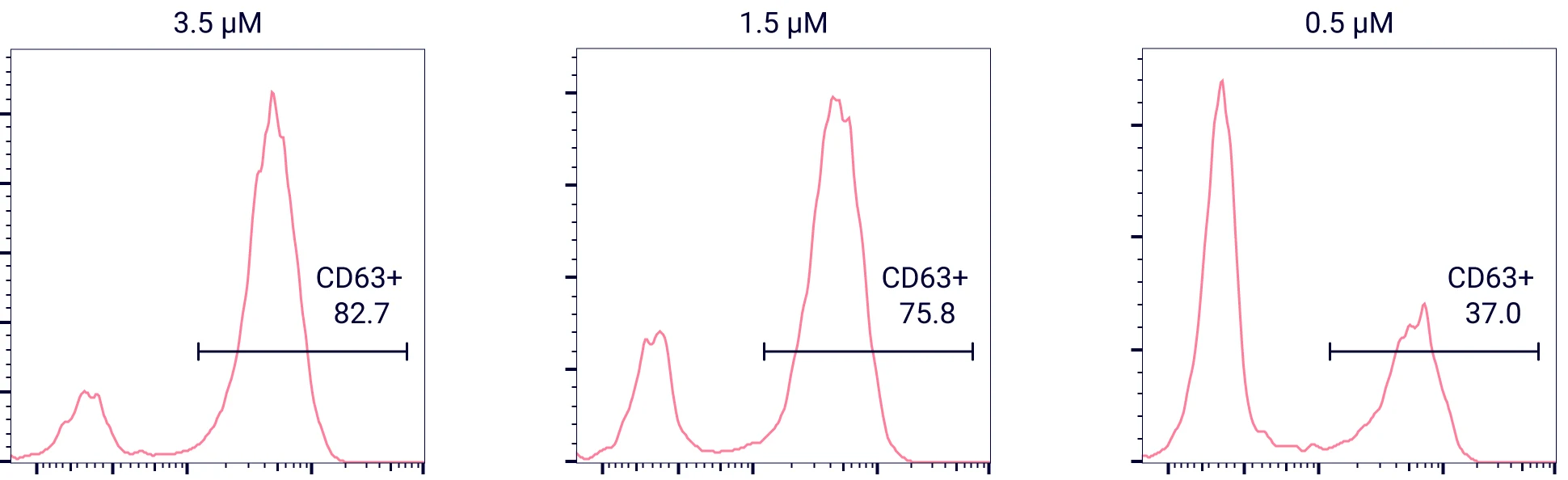
Genoskin expands its non-clinical testing services with the introduction of CD63 staining via flow cytometry. This advanced method enhances the measurement of mast cell degranulation studies by precisely measuring CD63 surface expression at the single-cell level. Ideal for drug development, safety assessments, and immune research, CD63 staining allows for high-sensitivity detection of degranulation and can be paired with other markers for multi-parameter analysis.
Substance P activation
Anti-IgE activation
Resources
Publication – Different activation signals induce distinct mast cell degranulation strategies, Gaudenzio et al.
- Different activation signals induce distinct mast cell degranulation strategies
- Published in The Journal of Clinical Investigation – September 19, 2016
- Nicolas Gaudenzio, Riccardo Sibilano, Thomas Marichal, Philipp Starkl, Laurent L. Reber, Nicolas Cenac, Benjamin D. McNeil, Xinzhong Dong, Joseph D. Hernandez, Ronit Sagi-Eisenberg, Ilan Hammel, Axel Roers, Salvatore Valitutti, Mindy Tsai, Eric Espinosa, and Stephen J. Galli.
- Published in The Journal of Clinical Investigation – September 19, 2016
Publication – Human mast cells drive memory CD4+ T cells toward an inflammatory IL-22+ phenotype, Gaudenzio et al.
- Human mast cells drive memory CD4+ T cells toward an inflammatory IL-22+ phenotype
- Published in The Journal of Allergy and Clinical Immunology – March 20,2013
- Nicolas Gaudenzio, PhD, Camille Laurent, MD, Salvatore Valitutti, MD, Eric Espinosa, PhD
- Published in The Journal of Allergy and Clinical Immunology – March 20,2013
Mast cells factsheet
Webinar – Mast Cells: Can’t live with them, can’t live without them? – Prof. Marcus Maurer
Webinar – MRGPRX2+ Mast Cells : From Biology to Clinical Perspective in Skin Immunology – Dr. Nicolas Gaudenzio
Poster – Single-cell Profiling of Biostabilized Natural Human Skin Identifies Mast Cells as an Important Target of Injected mRNA-1273 COVID-19 Vaccine
- Single-cell Profiling of Biostabilized Natural Human Skin Identifies Mast Cells as an Important Target of Injected mRNA-1273 COVID-19 Vaccine
- Scientific poster presented at the European Mast Cell and Basophil Research Network (EMBRN) conference in Toulouse, France – May 2024
- Manon Scholaert, Mathias Peries, Emilie Braun, Jeremy Martin, Nadine Serhan, Katarzyna Polak, Alexia Loste, Audrey Bruner, Lilian Basso, Benoit Chaput, Eric Merle, Pascal Descargues, Emeline Pagès, Nicolas Gaudenzio
- Scientific poster presented at the European Mast Cell and Basophil Research Network (EMBRN) conference in Toulouse, France – May 2024
Webinar – Evolving insights into the role of mast cells in anaphylaxis – Dr. Soman Abraham
Poster – Advancing mast cell research with a standardized human primary cell platform
- Advancing mast cell research with a standardized human primary cell platform
- Scientific poster presented at the European Mast Cell and Basophil Research Network (EMBRN) conference in Vienna, Austria – June 2026
- Chenyan Wu, Cyprien Pecalvel, Anthony David, Nicolas Gaudenzio
- Scientific poster presented at the European Mast Cell and Basophil Research Network (EMBRN) conference in Vienna, Austria – June 2026
Publication – Aging increases the severity of anaphylaxis through changes in Mast Cell numbers and histamine sensitivity, Kamphuis et al.
- Aging increases the severity of anaphylaxis through changes in Mast Cell numbers and histamine sensitivity
- Published in Allergy – July, 2025
- Jasper B. J. Kamphuis, Alexia Loste, William P. M. Worrall, Nadine Serhan, Thomas Villeneuve, Pol André Apoil, Benjamin Trouche-Estival, the IHU HealthAge INSPIRE/Open Science group, Laurent Guilleminault, Nicolas Gaudenzio, Laurent L. Reber
- Published in Allergy – July, 2025
Publication – PAC regulates endo-, and exocytosis, and lysosomal-mitochondrial stress signaling in human mast cells
- PAC regulates endo-, and exocytosis, and lysosomal-mitochondrial stress signaling in human mast cells
- Published in Cell Communication and Signaling, January 2026
- Korollus Melek, Philip Steiner, Sven Kappel, Benjamin Gottschalk, Ancuela Andosch, Michelle Duggan, Wolfgang F. Graier, Susanna Zierler & Christine Peinelt
- Published in Cell Communication and Signaling, January 2026