
Compare ex vivo human skin models
Find the right human skin model for your research.
Genoskin offers a range of ex vivo human skin models designed for different research needs, from topical testing to injectable drug efficacy assessment, wound healing and site-specific applications. Use the table below to compare their main features, formats and applications.
Biological platforms adapted to your research needs.

HypoSkin®
Human skin model for injectable testing
HypoSkin® is a live, full-thickness human skin model with epidermis, dermis and hypodermis. It supports intradermal and subcutaneous administration to assess the performance of injectable therapeutics and medical devices, injection site reactions, and local tolerance.

NativeSkin®
Versatile ex vivo human skin model
NativeSkin® is a live, full-thickness human skin model preserving the epidermis, dermis, resident immune cells and skin appendages. It supports topical and systemic testing for efficacy, local safety, penetration, barrier function and inflammatory responses.

WoundSkin®
Ex vivo human wound model
WoundSkin® is a live human skin model with a standardized wound surrounded by an intact epidermal, dermal and immune environment. It supports the evaluation of wound healing, infection, biofilm formation, and the efficacy of wound-care products and treatments.

HairSkin®
Ex vivo human scalp & hair follicle model
HairSkin® is a live human skin model containing mature hair follicles and pilosebaceous units within their native environment. It supports scalp research, scalp-care and treatment development, follicular delivery, and haircare product evaluation.

FacialSkin
Ex vivo human facial skin model
FacialSkin is a live human skin model derived from facial tissue that preserves its native epidermal and dermal architecture. It supports facial skincare research, anti-aging and treatment development, barrier assessment, and product efficacy and safety testing.

BreastSkin
Ex vivo human breast skin model
BreastSkin is a live, full-thickness human skin model derived from breast tissue that preserves its native epidermal and dermal architecture. It supports breast, bust and décolleté research, product development, and product efficacy and safety testing.

NativeSkin® Tape Stripped
Disrupted skin barrier model
NativeSkin® Tape Stripped is a live human skin model with a mechanically impaired stratum corneum that reproduces controlled barrier disruption. It supports the evaluation of barrier-repair products, penetration, irritation and responses in compromised skin.
Compare Genoskin models

Different applications need different tissue characteristics. Use this as a starting point, or ask our team for a recommendation.
Need help choosing the right model for your research?
Tell us what you’re testing. A Genoskin scientist will help identify the appropriate model, configuration and experimental approach.
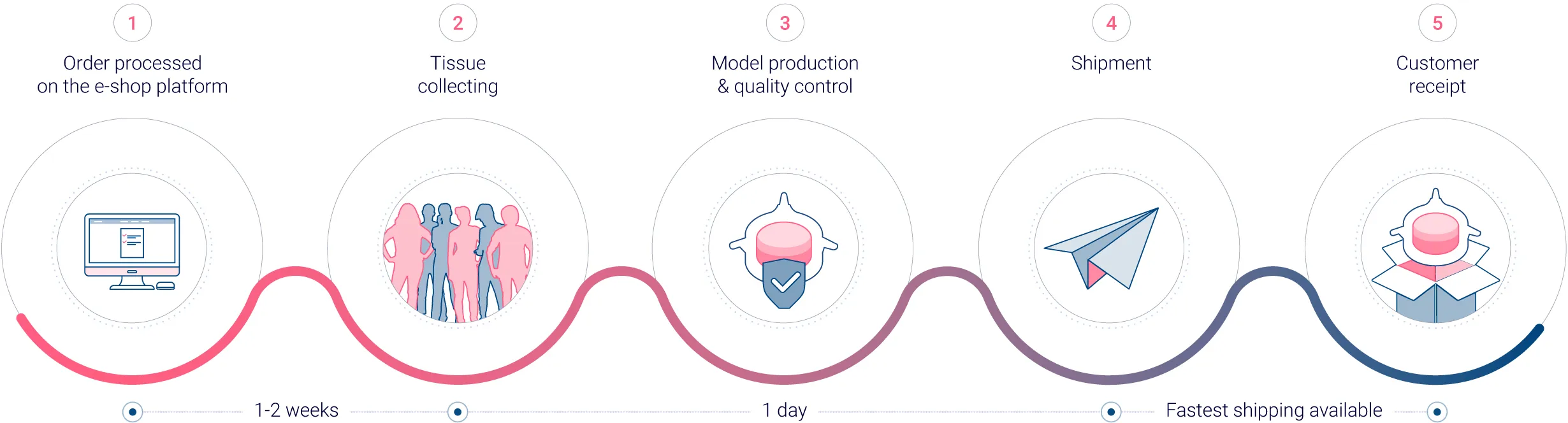
How it works?
From donated skin to reliable human data
Frequently Asked Questions
Which Genoskin model should I choose?
- HypoSkin®: intradermal and subcutaneous administration
- NativeSkin®: topical efficacy, safety, penetration and skin-response studies
- NativeSkin® Tape Stripped: disrupted-barrier and barrier-repair studies
- WoundSkin®: wound healing, infection and wound-care research
- HairSkin®: scalp, hair follicle and pilosebaceous-unit research
- FacialSkin: facial skincare and treatment development
- BreastSkin: breast, bust and décolleté research
What skin layers are preserved in the models?
Are Genoskin models immunocompetent?
Can several donors be included in a single order?
How is ex vivo human skin different from reconstructed skin models?
Where does the human tissue come from?
Can the models be customized based on donor characteristics?
Are all models available for purchase?
What is the delivery time and form of delivery? Can you ship to my location?
What does it cost?
Have more questions? Visit our FAQ page →
Want more research like this in your inbox? Subscribe to our newsletter →