
Inflammation and disease research

Human ex vivo models for inflammatory skin disease research

Generate human-relevant data for better-informed dermatology drug development

Genoskin

Inflammatory skin diseases such as psoriasis and atopic dermatitis (AD) involve complex interactions between immune signaling, resident immune cells and epidermal biology. Capturing these mechanisms in a physiologically relevant human tissue environment can help drug developers make more informed decisions before clinical studies.

Genoskin provides human ex vivo skin models and research services designed to reproduce key disease-relevant features of inflammatory skin disorders while preserving native human skin architecture and resident immune cells.

Our platforms enable the study of distinct inflammatory mechanisms, from T cell–driven Th1/Th17 psoriasis-like inflammation to type 2 cytokine–driven barrier impairment in atopic dermatitis. Both allow therapeutic candidates to be evaluated using relevant human tissue and multi-parametric readouts.

Explore our inflammatory skin disease models
Psoriasis


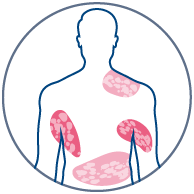
Evaluate anti-psoriasis biologics and small molecules, including topical formulations and injected drugs, using InflammaSkin®. It is a T cell–driven human ex vivo model designed to reproduce key features of early Th1/Th17-mediated psoriatic inflammation.

Atopic dermatitis


Evaluate topical therapeutics in a type 2–driven human skin barrier impairment model. IL-4 and/or IL-13 stimulation reproduces key features of AD-associated barrier dysfunction.

From mechanism to efficacy, generate human data that helps you select, rank and advance your next dermatology candidate.

Psoriasis and atopic dermatitis involve distinct immune pathways and biological changes in the skin, requiring different approaches to evaluate therapeutic efficacy. Our human ex vivo induction models reproduce key disease-relevant features of each condition to generate translational data for drug development. They do not reproduce the full complexity of either disease in vivo, including systemic immunity.

Which inflammatory pathway are you targeting?

Tell us your indication, modality, target, formulation constraints and the decision you need to make. We’ll propose a study design aligned to your program.

Want more research like this in your inbox? Subscribe to our newsletter →

Frequently asked questions

What is InflammaSkin® and how is it used in psoriasis research?

InflammaSkin® is a human ex vivo skin model designed to reproduce the early immune-driven phases of psoriasis. Resident T cells are activated directly within native human skin and continuously stimulated to generate a Th1/Th17 inflammatory phenotype, allowing researchers to study psoriasis-related inflammation and evaluate therapeutic responses.

What types of psoriasis treatments can be tested with InflammaSkin®?

InflammaSkin® can be used to evaluate both biologics and small-molecule therapies. Test compounds can be applied topically, added to the culture medium to model systemic exposure, or administered by subcutaneous or intradermal injection depending on the intended clinical route.

What psoriasis biomarkers and readouts can be measured?

Studies can assess psoriasis-relevant cytokines and immune responses, including IL-17A, IL-22, IFN-γ, TNF-α and other inflammatory mediators. Additional analyses can evaluate T-cell activation and proliferation, including markers such as CD69 and Ki-67, as well as epidermal activation and tissue-level changes.

Can InflammaSkin® be used to assess treatment efficacy?

Yes. InflammaSkin® is designed to assess pharmacological responses to anti-inflammatory and anti-psoriatic therapies. For example, studies described by Genoskin have shown cytokine suppression following betamethasone treatment and dose-dependent reductions in IL-17A, IL-22 and IFN-γ following subcutaneous administration of adalimumab.

Can InflammaSkin® models be purchased for use in my own laboratory?

No. InflammaSkin® is currently available exclusively through Genoskin’s in-house psoriasis research services. Genoskin’s skin and immunology experts perform the studies under controlled conditions to ensure appropriate model handling, inflammatory induction and analysis.

What makes InflammaSkin® different from reconstructed psoriasis skin models?

Unlike reconstructed skin models, InflammaSkin® uses native human skin containing resident immune cells and preserves the natural tissue architecture. Psoriasis-like inflammation is driven through resident T cell activation rather than relying solely on externally added cytokines.

Does InflammaSkin® contain functional human T cells?

Yes. InflammaSkin® retains resident human immune cells, including T cells, which are activated within the tissue. T-cell activation and proliferation can be characterized using markers such as CD69 and Ki-67.

Can InflammaSkin® be used for dose-response studies?

Yes. Multiple concentrations or doses of a therapeutic candidate can be compared within a study and within one donor, or across multiple donors. Genoskin has demonstrated dose-dependent cytokine suppression following treatment with an anti-TNFα biologic.

Why use a human ex vivo psoriasis model during preclinical development?

A human ex vivo model enables researchers to investigate drug responses directly in native human skin containing resident cells and intact tissue architecture. This provides complementary human-relevant evidence alongside traditional in vitro and in vivo preclinical models.