
Skin Models
1
Sep
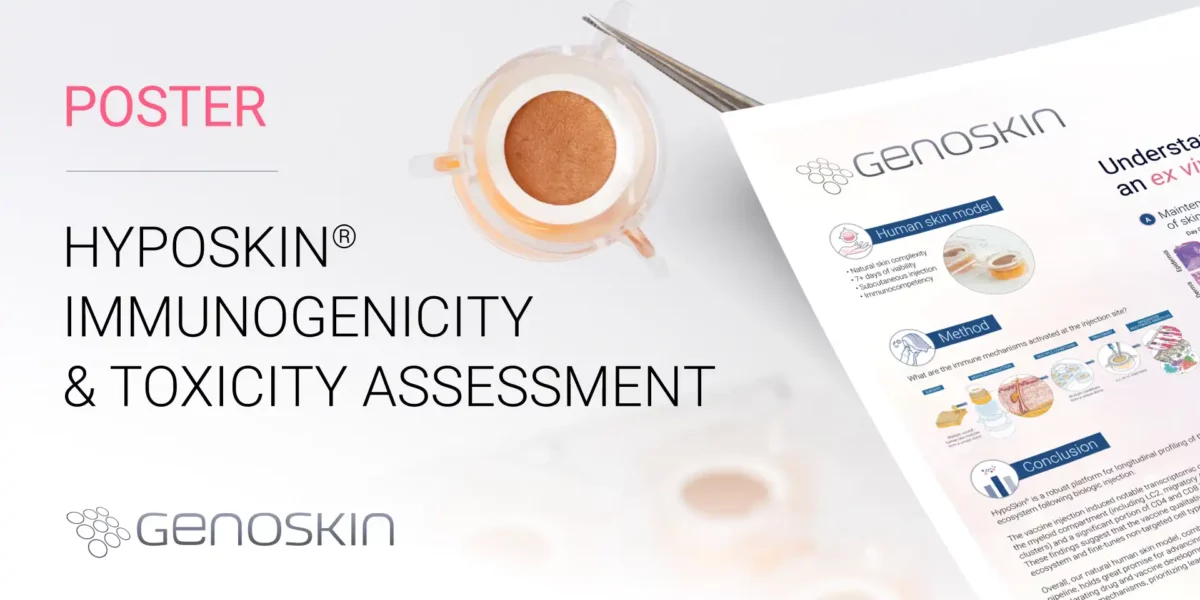
POSTER – Longitudinal maintenance of human skin viability in HypoSkin®
Home / Resources / Posters Poster A drug development platform for immunogenicity and toxicity assessment using advanced multi-omic profiling Manon Scholaert1,2, Mathias Peries2, Emilie Braun2, Alexandra Ochando3, Emeline Pagès2 and Nicolas Gaudenzio1,2 1Toulouse Institute for Infectious and Inflammatory Diseases (Infinity) INSERM UMR1291 - CNRS UMR5051 - University Toulouse III, France, 2Genoskin SAS, Toulouse, France, 3Genoskin Inc, Salem MA, USA LongitudinalRead more
27
Apr
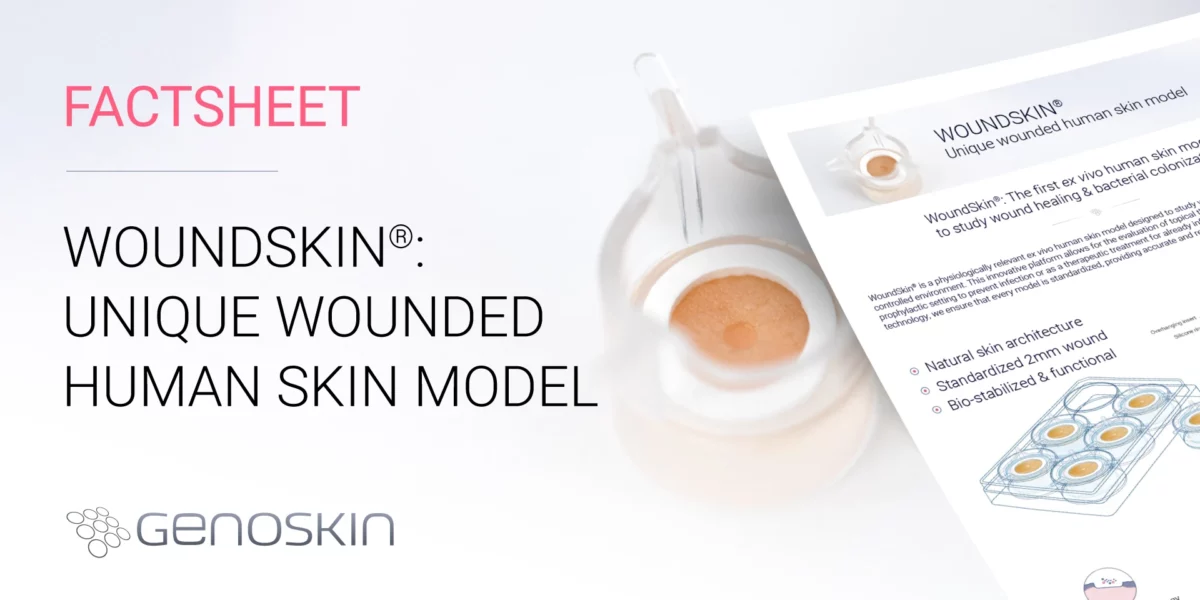
FACT SHEET – WoundSkin®: Advance your wound healing research
WoundSkin® FactsheetHuman ex vivo skin model to study wound healing & bacterial infectionWoundSkin® Factsheet: Advance Your Wound Healing Research Download the WoundSkin® factsheet to explore how a physiologically relevant, wounded human skin model can support your wound healing and infection research. Built on ex vivo human skin tissue, WoundSkin® preserves the full complexity of native skin, including immune responses, whileRead more
26
Mar
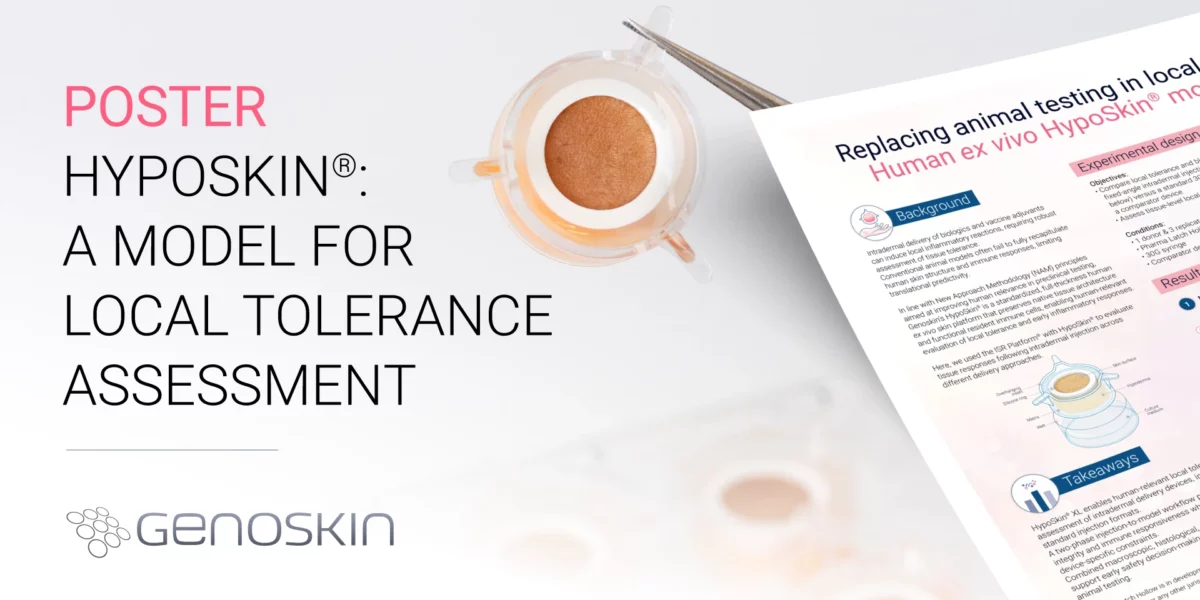
POSTER – SOT HypoSkin Pharma Latch
Home / Resources / Posters Poster Replacing animal testing in local tolerance assessment of an injection device: Human ex vivo HypoSkin® model as a New Approach Methodology (NAM) Jérémy Argenty1, Clémence Letzelter1, Catherine Marques1, Sophie Abadie1, Alexia Sanchez1, Claire Gendrin1, Alexandra Ochando1, Adam Rock2, Ronan Byrne2, Pascal Descargues1 and Nicky Bertollo2 1Genoskin, 2Pharma Latch HypoSkin® is an ex vivo human skin NAM thatRead more
26
Mar
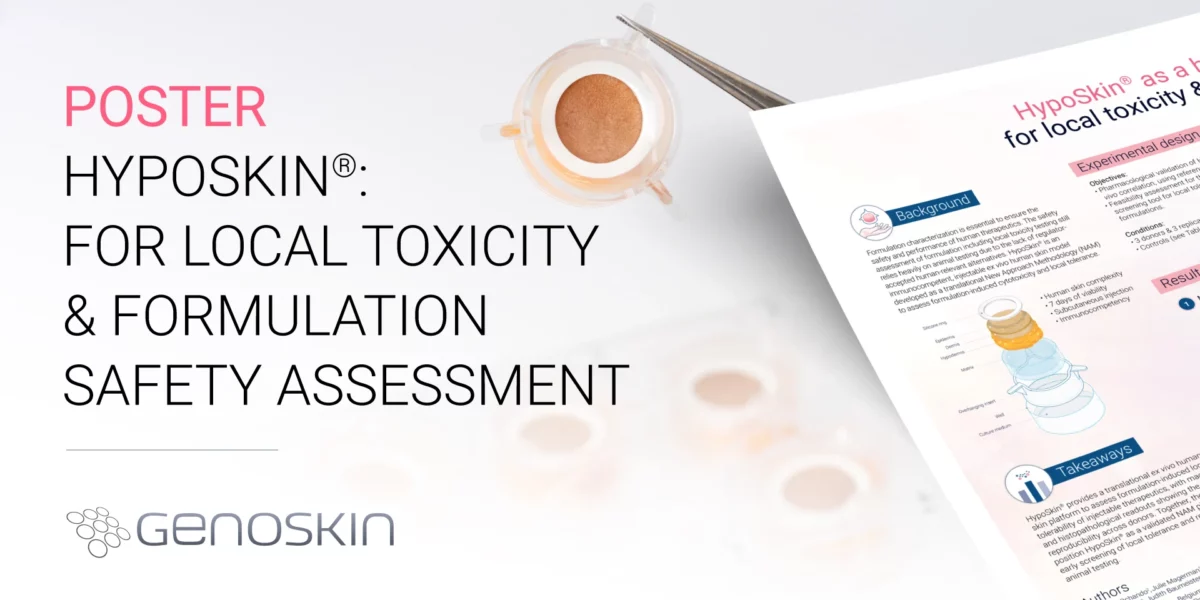
POSTER – SOT Hyposkin argenx
Home / Resources / Posters Poster HypoSkin® as a human-based NAMs platform for local toxicity and formulation safety assessment Julie Magerman1, Katarzyna Polak2, Ornella Binazon1, Michael Pastore2, Alexandra Ochando2 and Judith Baumeister1 1argenx, 2Genoskin Local Toxicity and Formulation Safety: An argenx Collaboration Study Formulation safety testing still relies heavily on in vivo studies due to limited validated in vitro alternatives. Genoskin’s HypoSkin® biostabilized ex vivo human skinRead more
2
Feb
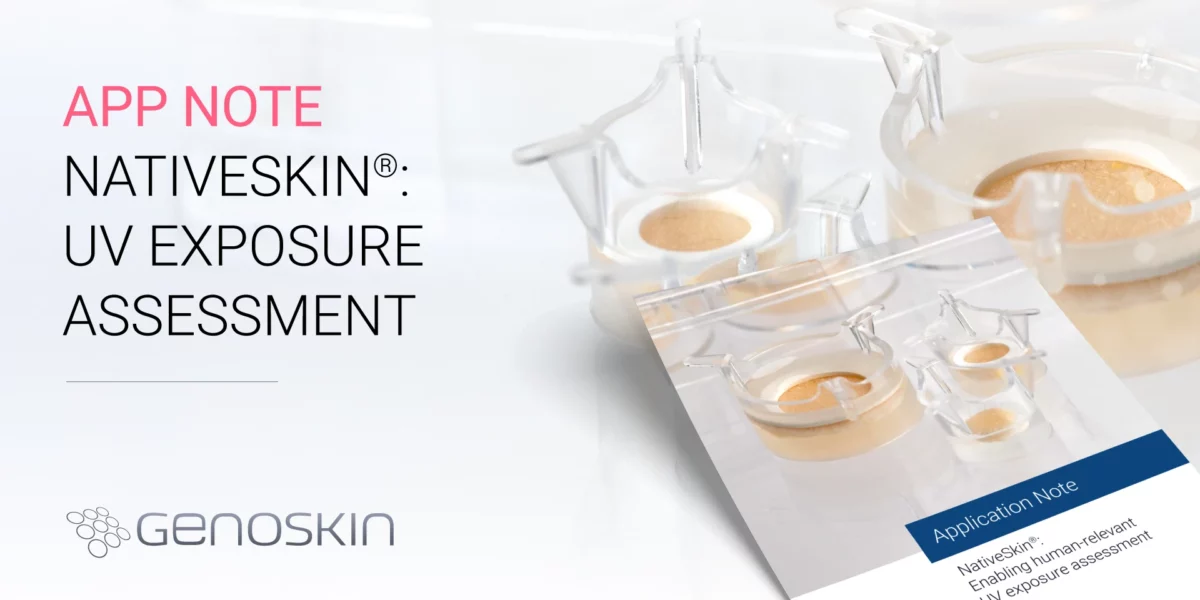
APPLICATION NOTE – NativeSkin® & UV testing
Explore how NativeSkin® supports ethical, human-relevant, and translational research in UV testing, phototoxicity assessment, and photobiology.
22
Oct
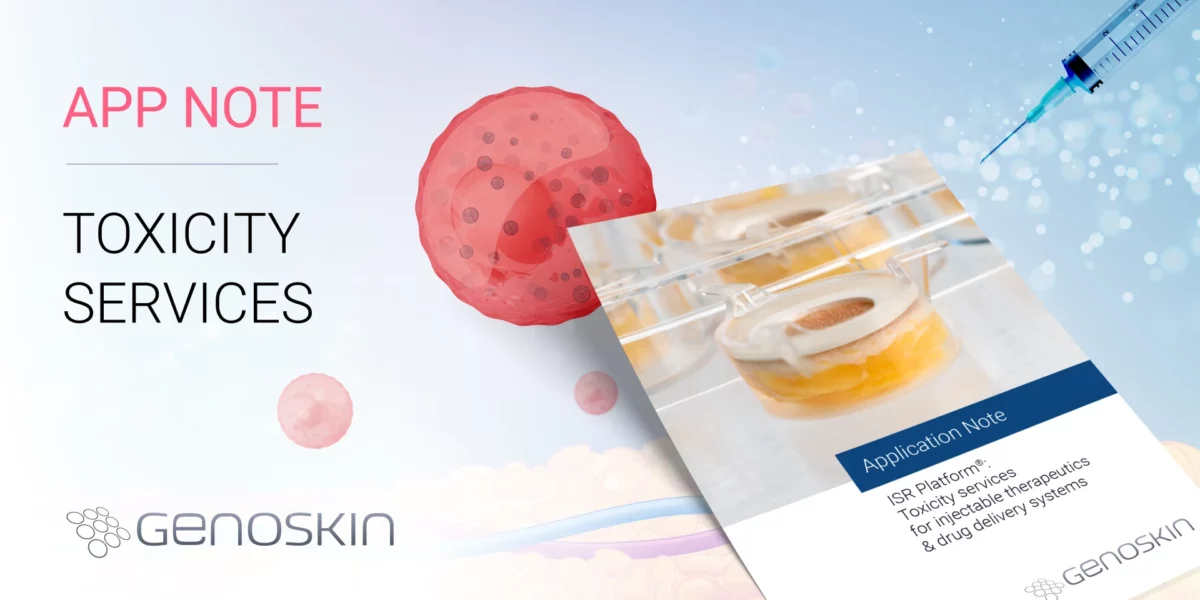
APPLICATION NOTE – Toxicity services for pharma, biotech & medical devices developers
Download this application note and discover 3 case studies. Refine formulations or assess local tolerance in human skin before clinical trials.
Ex vivo human skin platforms for better non-clinical decisions. Labs in France and the USA, serving 500+ customers worldwide.