
Why mast cells are important
Mast cells are tissue-resident immune cells best known for their role in allergic reactions, but their function extends far beyond allergy. Located in barrier tissues such as the skin, airways, and gastrointestinal tract, they help detect environmental triggers, pathogens, tissue damage, and inflammatory signals.
Through the release of histamine, proteases, lipid mediators, cytokines, and chemokines, mast cells contribute to immune cell recruitment, vascular responses, tissue repair, and host defense.
While these responses can be protective, excessive or dysregulated mast cell activity can also drive allergic inflammation, chronic disease, fibrosis, and tissue pathology.
For this reason, mast cells are important targets in drug discovery. Many therapeutic approaches aim to block mast cell activation or mediator release, but growing interest is now focused on strategies that reduce mast cell numbers or selectively eliminate pathogenic mast cell populations.
Understanding mast cell depletion, and how to evaluate it in human-relevant models, is therefore increasingly important for researchers developing mast-cell-targeting therapies.
1. What is mast cell depletion?
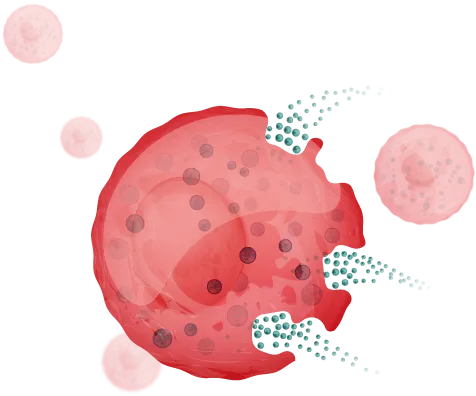
Mast cell depletion refers to strategies designed to reduce the number, survival, or persistence of mast cells in a given tissue or biological system. In research, it can help clarify the role of mast cells in disease mechanisms. In drug development, it can support the evaluation of therapies aimed at reducing mast-cell-driven pathology. This approach differs from other mast-cell-targeting strategies.
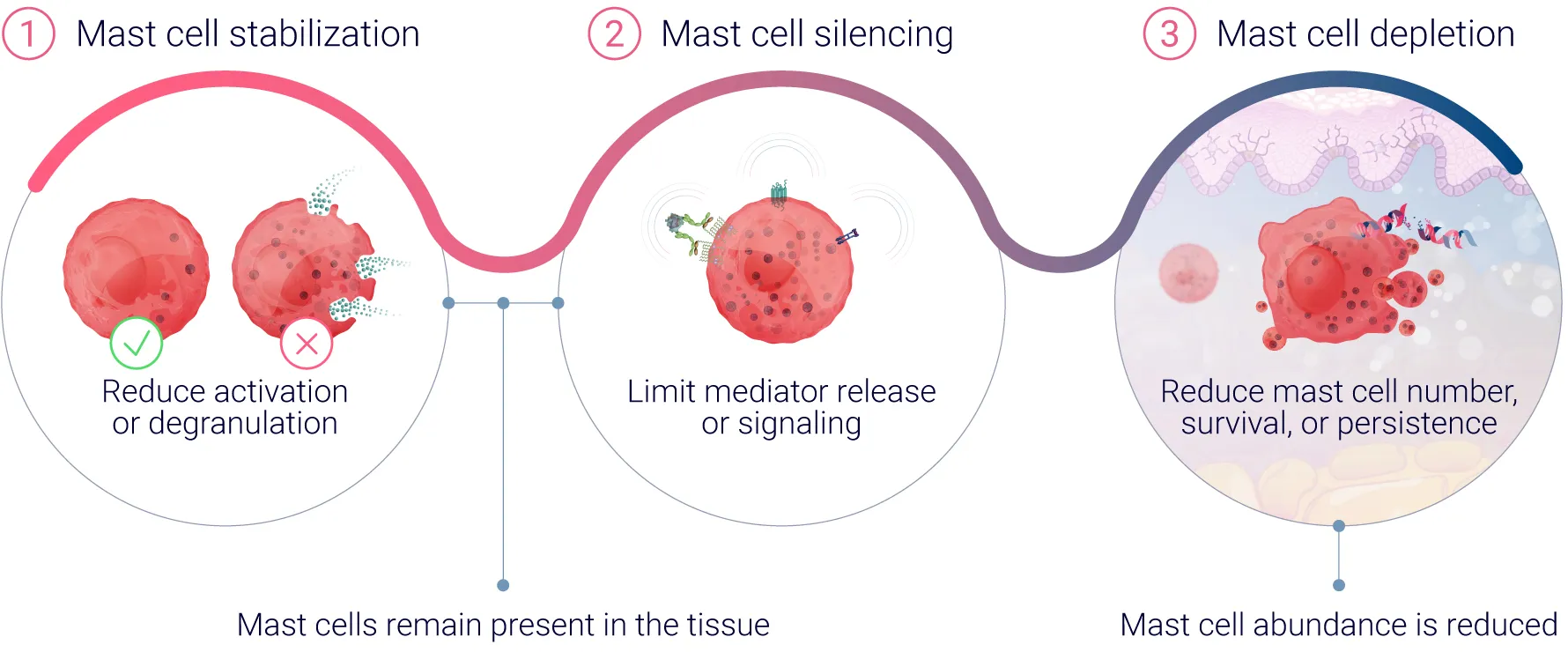
This distinction is important because mast cells may act as disease drivers, inflammatory amplifiers, regulatory cells, or bystanders depending on the indication. Depletion studies therefore help determine whether reducing mast cell numbers changes disease-relevant pathways or tissue responses, providing insight into their true role within a complex biological environment.
2. Main mechanisms of mast cell depletion
Mast cell depletion can be achieved through different mechanisms, depending on the therapeutic strategy and the biological context.
- c-KIT/SCF pathway inhibition
The c-KIT/stem cell factor (SCF) pathway is essential for mast cell development, survival, and maintenance in tissues. Blocking c-KIT signaling reduces mast cell survival signals and promotes depletion. This is one of the most advanced approaches in the field and includes tyrosine kinase inhibitors and anti-KIT antibodies, such as briquilimab and barzolvolimab.
- Direct pro-apoptotic strategies
Some approaches aim to directly induce mast cell death by activating apoptotic pathways. These strategies can reduce mast cell abundance, but they require careful assessment of selectivity, effects on surrounding cells, and potential impact on tissue integrity.
- Immune-mediated depletion and ADCC
Antibody-dependent cellular cytotoxicity, or ADCC, is a mechanism in which immune effector cells eliminate antibody-coated target cells. For mast cell depletion, this is especially relevant for antibody-based, Fc-engineered, bispecific, or immune-cell-engaging therapies. ADCC efficiency can vary depending on target expression, antibody design, Fc receptor biology, natural killer (NK) cell availability, and donor-specific immune composition.
3. Why human-relevant models are critical
Mast cells are highly shaped by their tissue environment. Their phenotype, survival requirements, activation threshold, and response to depletion can vary depending on local signals from epithelial cells, stromal cells, endothelial cells, and surrounding immune cells.
This is especially important for mast cell depletion studies. A mechanism that appears effective in a simplified assay may behave differently in human tissue, where mast cells receive survival signals and interact with other cell populations. Donor-to-donor variability can also influence target expression, immune cell composition, and depletion efficiency.
Human-relevant models help bridge this gap by allowing researchers to evaluate whether a depletion strategy works in a more physiological context. This is particularly valuable for complex biologics and immune-engaging therapies, where efficacy may depend not only on mast cells themselves, but also on the surrounding human immune environment.
4. What are the applications for mast cell depletion studies?
- Allergy and inflammation
Mast cell depletion studies can support the evaluation of therapies for diseases where mast cells contribute to pathology, including chronic urticaria, mastocytosis, mast cell activation disorders, asthma, and inflammatory skin diseases.
- Drug discovery and mechanism-of-action studies
Depletion assays can help determine whether a compound reduces mast cell numbers, induces apoptosis, blocks survival signaling, or acts through immune-mediated killing.
- ADCC and immune-engaging biologics
For antibody-based or immune-engaging therapies, human-relevant models can help assess how target expression, Fc receptor engagement, NK cell availability, and donor variability influence depletion efficiency.
- Translational de-risking
These studies can provide early human proof-of-concept before costly preclinical or clinical studies, especially when animal models may not fully reflect human mast cell biology.
- Oncology and tumor microenvironment research
Mast cells are also studied in the tumor microenvironment, where they may influence immune regulation, tissue remodeling, and resistance to immunotherapy.
5. Potential readouts for mast cell depletion
A robust mast cell depletion study should assess not only whether mast cell numbers decrease, but also how treatment affects mast cell phenotype, viability, function, and the surrounding tissue environment.
- Mast cell abundance
Mast cell reduction can be quantified by flow cytometry using markers such as CD45, CD117/c-KIT, and FcεRI. This provides a direct measurement of changes in mast cell frequency after treatment.
- Mast cell phenotype
Phenotypic profiling can help determine whether treatment affects key mast-cell-associated markers, including c-KIT, FcεRI, MRGPRX2, Siglec markers, or complement receptors.
- Viability and apoptosis
Viability and apoptosis readouts help clarify whether mast cell reduction is associated with cell death, impaired survival, or another mechanism of depletion.
- Functional activation or silencing
For remaining mast cells, functional assays can assess whether they retain the ability to respond to stimulation. Relevant readouts may include:
-
- CD107a or CD63 expression
- β-hexosaminidase release
- Histamine or tryptase release
- Cytokine and chemokine secretion
Substance P activation
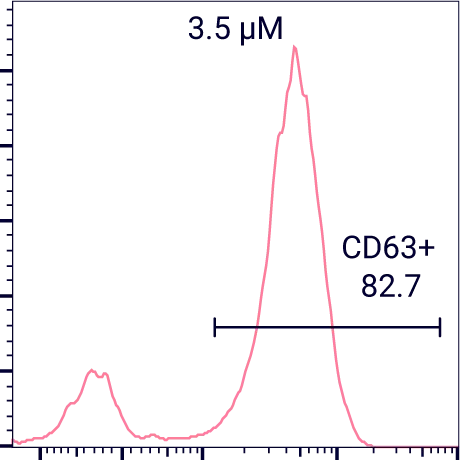
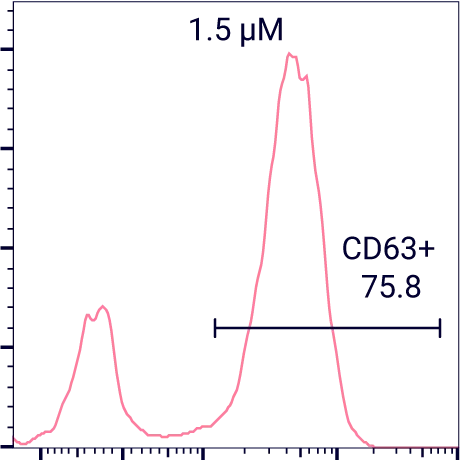
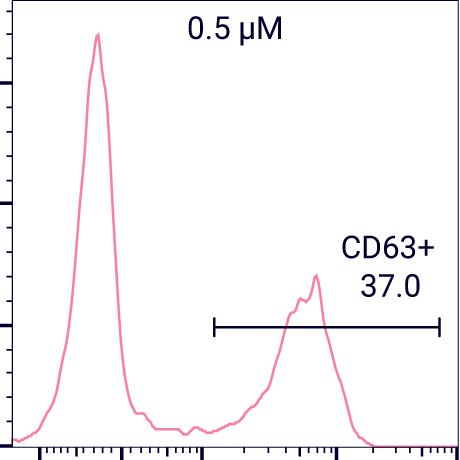
Measurement of mast cell degranulation by measuring CD63 surface expression at the single-cell level

Upon stimulation of the Fcε receptor 1α with an IgE agonist antibody, ß-hexosaminidase activity was detected in the culture supernatant
- Immune cell profiling & tissue-level readouts
For ADCC or immune-engaging strategies, broader immune cell profiling can evaluate NK cells, T cells, myeloid cells, and other CD45+ populations. In tissue models, these analyses can be combined with histology, cytokine profiling, morphology, or transcriptomics to assess the wider biological impact of depletion.
6. Introducing Genoskin’s approach
Mast cell depletion studies require both controlled mechanistic evaluation and validation in a human tissue context. Genoskin supports this through a complementary two-step workflow.
Genoskin combines:
- Mechanistic screening using primary in vitro human mast cells
Primary in vitro human mast cells can be used to evaluate how a candidate compound affects mast cell survival, phenotype, activation, and functional responses. This controlled system supports early screening, depletion assessment, and mechanism-of-action characterization. - Tissue-context validation using HypoSkin®
HypoSkin® model enables evaluation of mast cell depletion directly in intact human skin. This allows researchers to assess mast cell counts, immune cell dynamics, donor variability, and responses to injectable or locally acting compounds within a human tissue microenvironment.
Together, these two approaches help researchers confirm depletion mechanisms, profile donor-specific responses, and de-risk mast-cell-targeting therapies before later-stage development.
Interested in mast cell depletion studies? Contact Genoskin to discuss how our primary in vitro human mast cells and HypoSkin® models can support your research.
Conclusion
Mast cell depletion is an emerging strategy for understanding and targeting mast-cell-driven diseases, but its evaluation requires models that reflect both human mast cell biology and the surrounding tissue environment. By combining standardized human primary mast cells with ex vivo human skin models, researchers can better assess depletion mechanisms, functional impact, donor variability, and translational potential before moving into later-stage development.
Comments are closed.