
ANALYTICAL SERVICES
Assays & Readouts for Ex Vivo Human Skin Studies
Turn human tissue response into actionable data

As a contract research organization (CRO) specializing in ex vivo human skin and human mast cells, Genoskin supports pharmaceutical and cosmetics companies, medical device manufacturers and academic researchers in their work. Genoskin scientists combine advanced assays and analytical technologies with living, immunocompetent human skin models to characterize biological responses from the tissue level down to cells, proteins, genes and molecular pathways. From histology and cytokine profiling to transcriptomics, spatial biology and bioinformatics, readouts support preclinical research, product evaluation and translational studies, helping you understand what happens, where it happens and which biological mechanisms are involved.
Explore our assays & readouts
Histology
See how your treatment impacts human skin tissue
Visualize changes in tissue architecture and cellular morphology directly in human skin.
Histological analysis provides a tissue-level assessment of treatment effects and can help identify structural alterations, inflammation, tissue damage, and other morphological responses.
From standard H&E staining to targeted immunostaining and immunofluorescence, our analyses can be adapted to the biomarkers and biological questions relevant to your study. For colocalization studies of markers, we provide automated quantification based on our bioinformatics capabilities.
Key applications include:
Tissue structure and integrity
Inflammation and tissue damage
Biomarker expression, localization and quantification
Epidermal, dermal and adipose tissue morphology
Cell proliferation and apoptosis

Spatial biology platform
Understand not only which cells respond, but where
Preserve the spatial context of human skin biology.
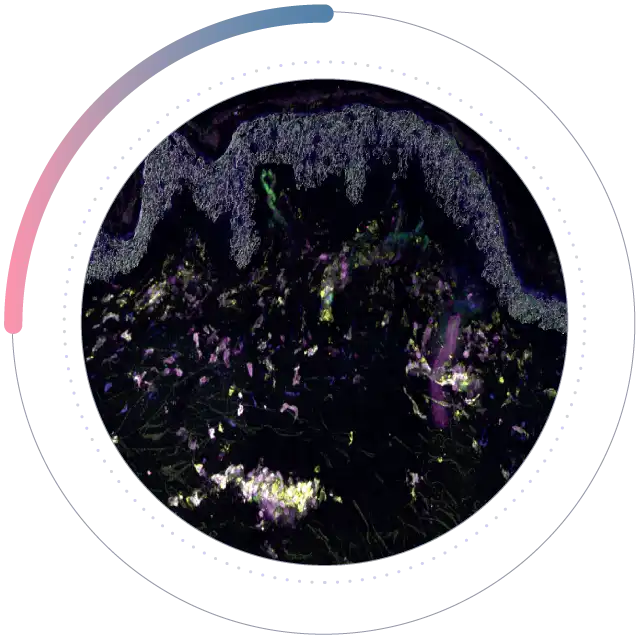
Genoskin’s MANTIS® Spatial Biology Platform combines fluorescence-based multiplex 3D imaging with automated image analysis to characterize cells directly within their native tissue environment.
By simultaneously visualizing multiple biomarkers, MANTIS® enables spatially resolved immune phenotyping while preserving the architecture of the epidermis and dermis.
Go beyond traditional single-cell analysis to investigate cell localization, phenotype, interactions and proximity within human skin.
Key applications include:
Spatial immune profiling
Cell localization and quantification
Cell-to-cell proximity analysis
Multiplex biomarker analysis
Immune cell activation
Tissue-specific treatment responses
Multiplex cytokine release analysis
Characterize the inflammatory response
Understand how your compound modulates the human skin secretome.
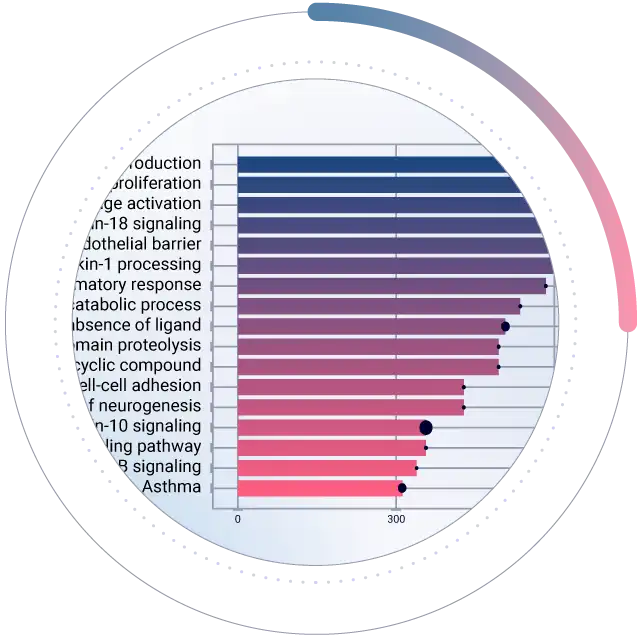
Multiplex cytokine and chemokine analysis enables the simultaneous measurement of inflammatory mediators released following treatment. By following these responses over time and across donors, we can characterize immune activation, identify treatment-related changes, and compare candidate profiles.
Combined with Genoskin’s bioinformatic-based app, AUDACY, cytokine data can also be translated into biological pathway-level insights. AUDACY (AUtomated Data Analysis of CYtokines) analyzes secretomic datasets to identify biologically relevant cytokine and chemokine patterns and connect them with the pathways they influence.
Key applications include:
Inflammatory response profiling
Immune activation
Mechanism-of-action studies
Immunotoxicity assessment
Candidate and formulation comparison
Cell proliferation and apoptosis
Flow cytometry
Profile immune responses at the single-cell level
Move from global tissue response to individual cell populations.
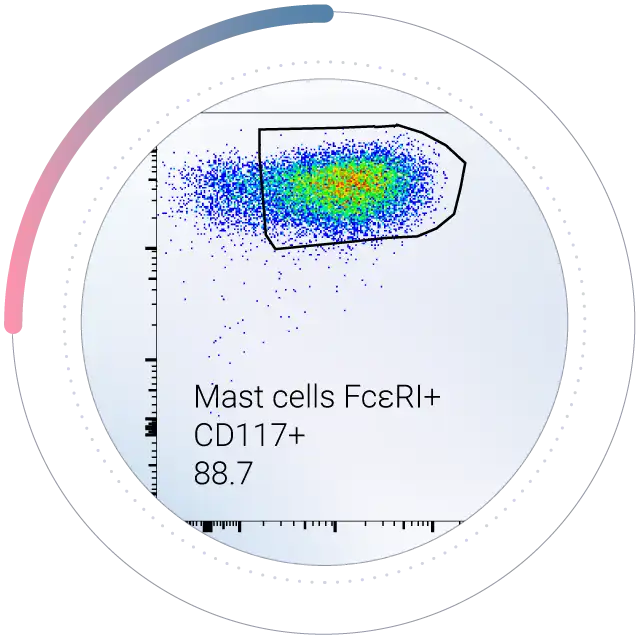
Flow cytometry enables detailed characterization of cells isolated from human skin or primary cell cultures. Multi-parametric analysis can reveal changes in cell populations, phenotype, activation status, apoptosis and proliferation following treatment.
This cellular-level information complements tissue, secretomic and transcriptomic data to provide a deeper understanding of the immune response.
Key applications include:
Immune cell phenotyping
Activation marker assessment
Treatment-induced immune modulation
Cell population analysis
Cell proliferation
Mechanistic studies
Transcriptomic analysis
Discover how treatment reshapes gene expression
Capture the molecular response of human skin at scale.
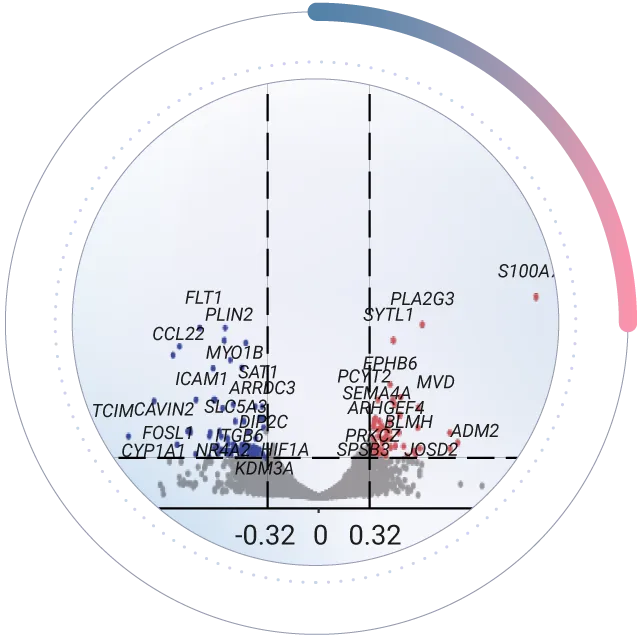
Transcriptomic analysis enables comprehensive assessment of gene expression changes following exposure to your compound. Using both bulk and single-cell RNA sequencing, subtle molecular responses can be detected even when they are not yet visible at the tissue level.
Our in-house bioinformatic-based app, FindYourPath, supports the interpretation of transcriptomic datasets by connecting differentially expressed genes with biological functions and pathways, helping uncover the mechanisms driving the observed response.
Depending on your research question, transcriptomic approaches can complement tissue-level and single-cell analyses for deeper biological characterization.
Key applications include:
Differential gene expression
Mechanism-of-action studies
Immune response characterization
Biological pathway identification
Biomarker discovery
Candidate comparison
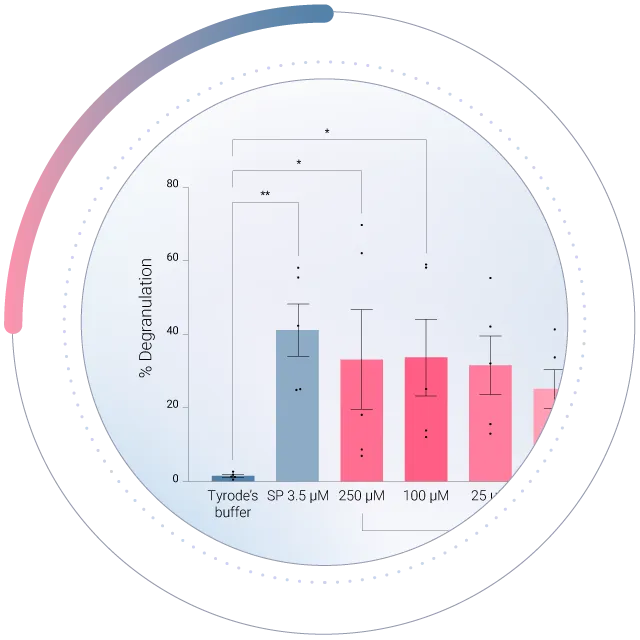
Enzymatic assays
Quantify functional biological responses
Measure functional changes using robust biochemical endpoints.
Enzymatic and activity-based assays provide quantitative readouts of specific biological functions following treatment. Depending on the study objective, these assays can be used to investigate endpoints such as cellular metabolic activity, viability, or immune cell degranulation.
They provide straightforward, quantitative data that can be used alone or combined with more comprehensive molecular and cellular analyses.
Key applications include:
Cell viability and metabolic activity
Functional response assessment
Dose-response characterization
Mast cell degranulation
Compound safety and efficacy
Bioinformatic analysis
Turn complex datasets into biological meaning
Generating data is only the first step. Understanding what it means is where the value lies.
Genoskin combines advanced analytical readouts with proprietary bioinformatics tools designed to interpret complex human biological datasets.
Our approaches help transform results into clear biological insights, identifying patterns, differentially regulated markers, and biological pathways that may otherwise remain hidden within large datasets.
One study. Multiple layers of human biology.
Different readouts answer different biological questions.
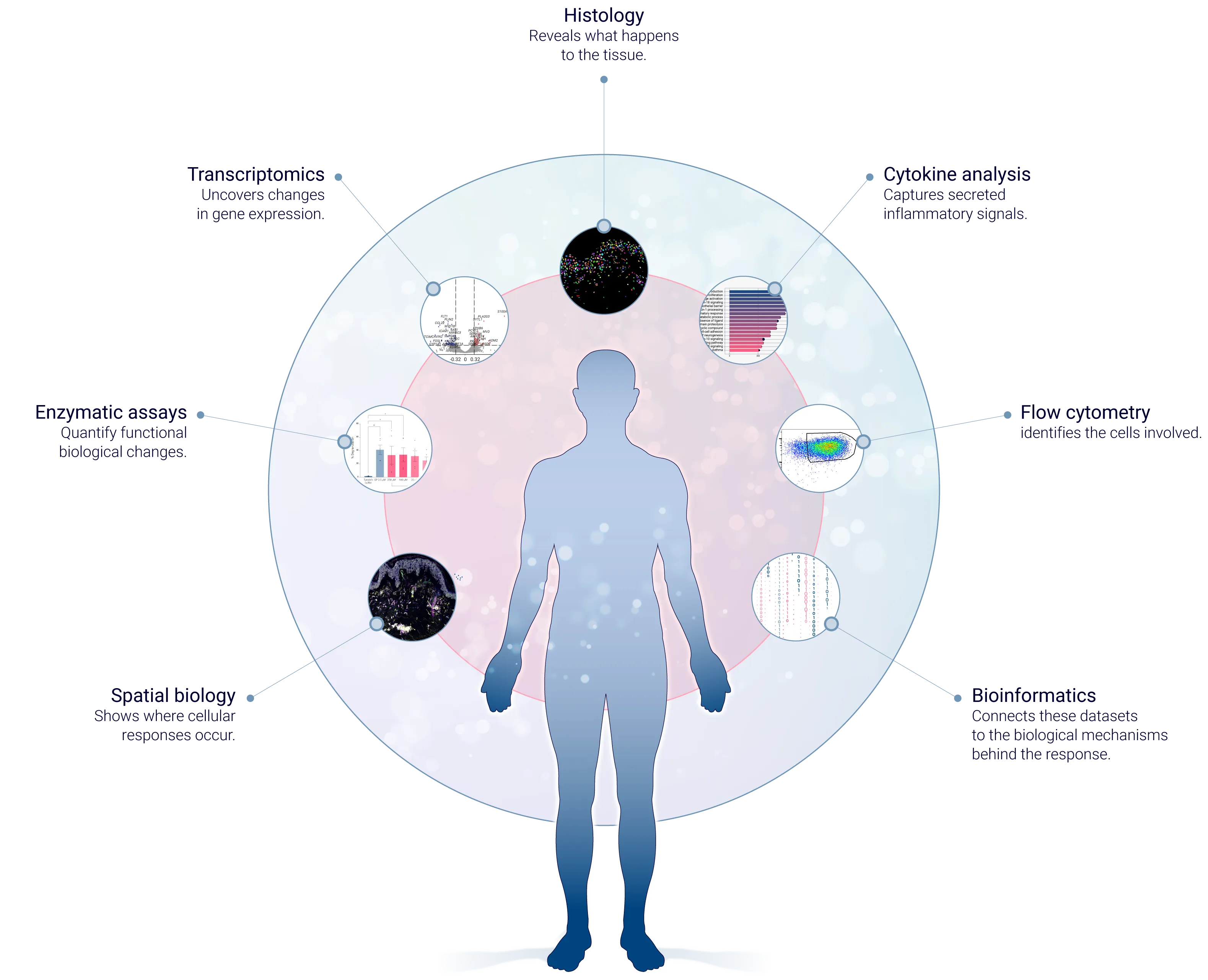
Designed around your research question
Every compound & development program is different.
Our scientific teams work with you to define the most relevant combination of human skin model, donor strategy, treatment conditions, time points and analytical endpoints for your objectives. Whether you need to evaluate efficacy, local tolerance, inflammatory response, immunotoxicity, mechanism of action or biomarker modulation, we build the analytical strategy around the decision you need to make.
From experimental design to data interpretation, Genoskin provides an integrated workflow for generating robust, human-relevant insights.
Want more research like this in your inbox? Subscribe to our newsletter →