
ISR Pilot Study – Ex Vivo Skin Toxicity Testing
Predict Injection Site Reactions in human skin before they appear in clinical trials
A 5-day ex vivo pilot study using living human skin to generate early local toxicity & immune response data for your injectable therapeutic.
Start with one donor before including more diversity in a multi-donor investigation. Immunocompetent. NAM-aligned.

Injection site reactions are the #1 reported adverse event for biologics
If you’re developing an injectable biologic (e.g. monoclonal antibody, ADC, or peptide therapeutic), injection site reactions are a foreseeable risk. They remain one of the most frequently reported adverse events in clinical trials for subcutaneous and intradermal products.
Standard pre-clinical models like rabbit lack the structural complexity, immune cell composition, and barrier function of human skin. Reactions that go unnoticed in animals can surface in first-in-human studies, leading to clinical holds, protocol amendments, or costly reformulation cycles.
That’s why Genoskin offers a 5-day ex vivo pilot study using living human skin, immunocompetent and NAM-aligned, to generate early local toxicity and immune response data for your injectable therapeutic. Start with one donor before including more diversity in a multi-donor investigation.
What if you could detect these signals earlier in actual human tissue before committing to GLP studies?
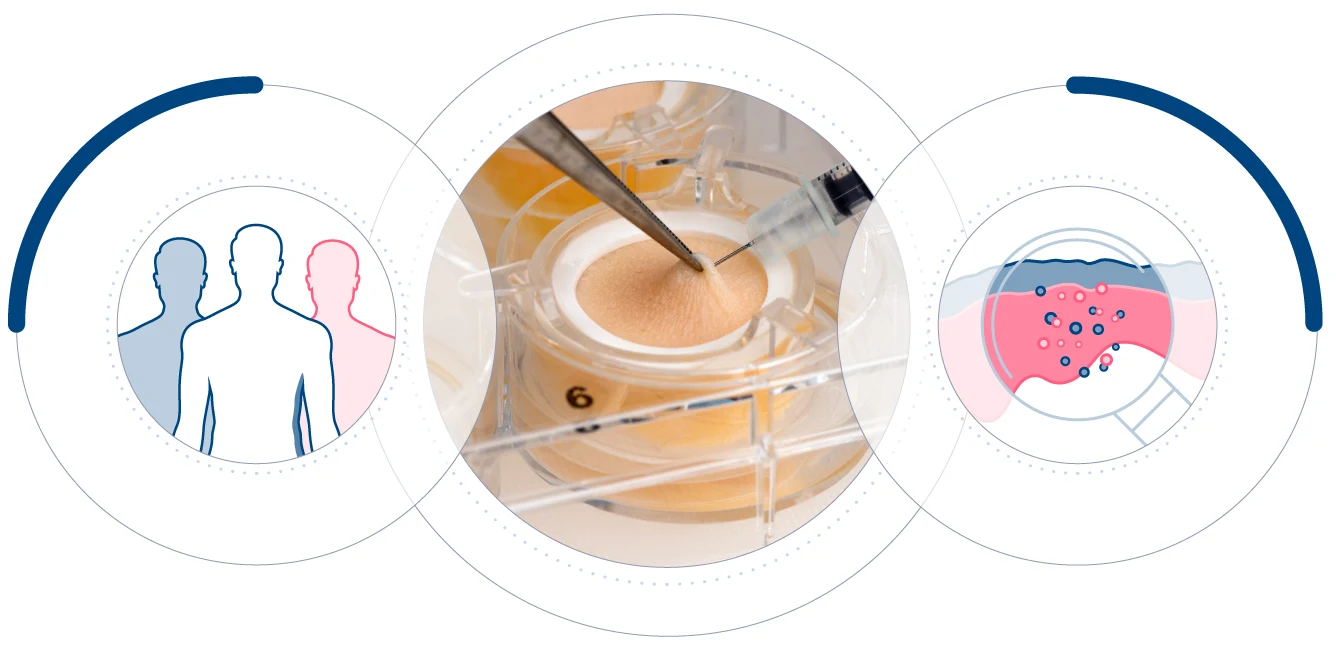
Experimental conditions
1 donor (n=3),
1 vehicle (negative control)
1 TA, 1 positive control
Analysis
H&E staining
Multiplex cytokine analysis
Experimental conditions
1 donor (n=3),
1 vehicle (negative control)
1 TA, 1 positive control
Analysis
H&E staining
Multiplex cytokine analysis
Where does the ISR Pilot Study fit your program?

Injection Site Reaction
Tolerance screening of injectable candidates

Formulation screening
Candidate prioritization and pipeline triage

Medical devices
Biocompatibility of drug delivery system
De-risking drug-device combination products
Evaluate local toxicity using biostabilized human skin
What the pilot study measures:
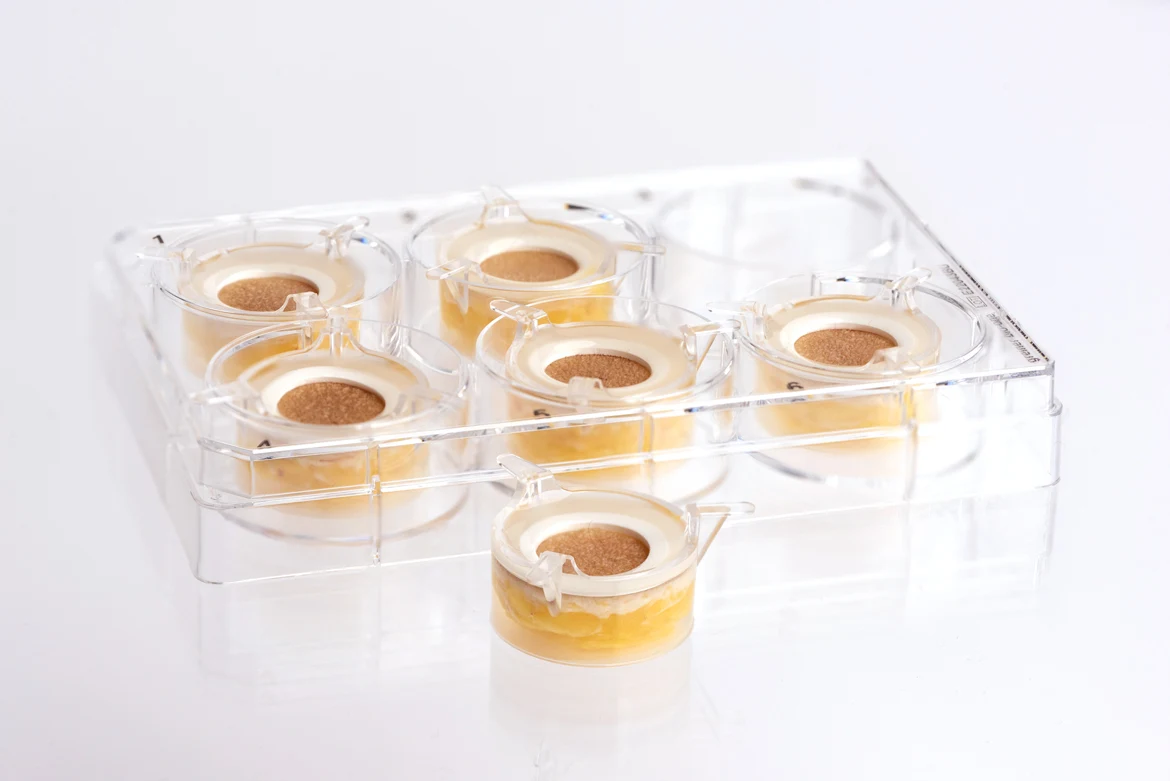
Evaluating local toxicity and injection site reactions in human skin is essential to de-risk injectable therapeutics before moving to clinical stages. Genoskin’s HypoSkin® platform provides an ex vivo, immunocompetent human skin model that preserves native structure, innate immune components, and subcutaneous architecture, delivering human-relevant insights that align with current NAM-focused regulatory expectations.
This toxicity pilot study offers an entry point to assess whether your therapeutic compound elicits morphological damage or initiates early inflammatory responses when injected into human subcutaneous tissue. Based on ex vivo biostabilized human skin, this New Approach Methodology provides decision-enabling data that support early safety assessment and guide downstream development.
This feasibility study is recommended when:
You are new to Genoskin’s technology and want to validate its relevance to your program.
You need early human-based data to support internal decision-making.
You require preliminary evidence to justify a larger, multi-donor investigation.
You are looking for preliminary data before setting up a larger program to de-risk several therapeutic candidates.
Analysis & readouts
Readouts included
Tissue viability: Hematoxylin & Eosin (H&E) staining
Immune response assessment: Multiplex cytokine analysis
Specific questions addressed
Streamlined workflow for actionable data
Genoskin implements a standardised workflow to generate reliable and actionable data:

Step 1
Study planning
Alignment on study objectives, compound characteristics, and safety questions.

Step 2
Cell preparation
Production of HypoSkin® from ethically sourced human skin for compound administration.

Step 3
Culture
Biostabilized skin is treated and maintained in ex vivo culture medium.

Step 4
Data analysis
Longitudinal analysis of safety signals to support candidate selection.

Step 5
Data reporting
Final report with actionable insights and next step recommendations.
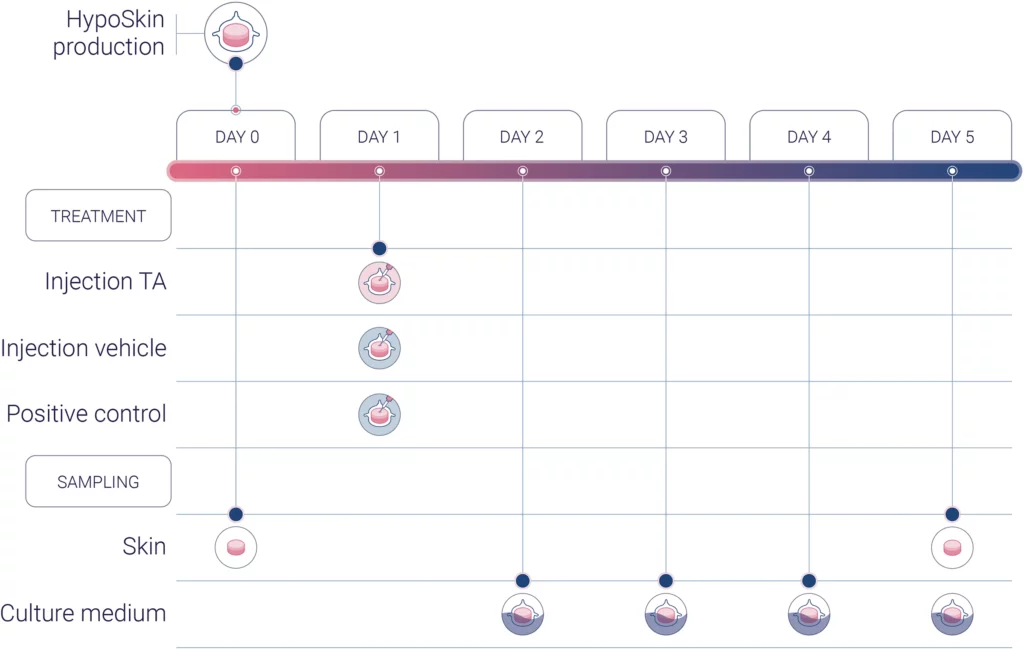
Typical turnaround: 6 weeks from compound receipt to final report delivery, including histopathological assessment, cytokine quantification, and full data interpretation.
What you receive
Data package
Final report
A note on biological variability: For statistically powered conclusions, a follow-up multi-donor study is recommended.
Common questions about the pilot study
What makes ex vivo models more representative than in vitro assays?
Inter-donor variability is not a limitation of ex vivo human models, but a critical advantage over conventional in vitro assays, which often average out the biological differences that shape real-world tissue and immune responses. By capturing how different human donors respond to an injectable candidate, ex vivo studies provide a more clinically relevant view of local tolerance, inflammatory risk, and formulation robustness.
How do you ensure compliance in human tissue-based studies?
All tissue is sourced from healthy adult donors undergoing elective surgery, under full informed consent and in compliance with applicable bioethics regulations. Genoskin maintains rigorous quality assurance and full traceability across its supply chain. Full terms and conditions can be accessed here: Terms & conditions
How is this different from testing in animal skin?
Animal skin (whether murine, rabbit, pig or non-human primate) differs significantly from human skin in thickness, immune cell composition, barrier function, and metabolism. HypoSkin® preserves full-thickness human skin with its native resident immune cells, providing toxicity data that more accurately reflects how your compound will behave in patients.
What is the typical turnaround time?
The experimental phase typically lasts 7+ days, with an overall timeline of approximately 6 weeks from compound receipt, including tissue logistics, analysis, and reporting.
Can I draw reliable conclusions from a single-donor study?
A pilot study is a feasibility screen, not a powered study. It generates early safety signals and identifies the most relevant readouts for a subsequent multi-donor investigation.
How is the tissue sourced?
From healthy adult donors undergoing elective surgery, under full informed consent and ethical approval. Genoskin maintains rigorous quality assurance and traceability across its supply chain.
What types of injectables can be tested?
HypoSkin® has been used to evaluate monoclonal antibodies, bispecific antibodies, ADCs, peptides, oligonucleotides, mRNA, LNPs as well as implantable medical devices and drug delivery systems. If your therapeutic is delivered subcutaneously or intradermally, the platform is likely applicable.
Does this data carry regulatory weight?
As a New Approach Methodology (NAM), the platform is aligned with the FDA Modernization Act 2.0 and supports internal decision-making with early human-relevant data. Combined with a multi-donor study, it can help inform candidate selection and de-risk study design ahead of GLP studies.
Ready to generate early safety data for your injectable?
Tell us about your compound and study objectives. Our scientific team will review your request and respond with a tailored pilot study plan including proposed timeline, readouts, and pricing, typically within 2 business days.
Study plans designed by Genoskin’s in-house scientific team
Typical response time: 1–2 business days
Your information is confidential and protected